
Illinois car accident laws determine who pays, how fault gets divided, what insurance every driver must carry, and how long you have to file a claim. If you were in a crash anywhere in Illinois, these rules apply to your case before you talk to an insurer or make any decisions about your claim.
This page covers Illinois personal injury laws as they apply to car accidents: the fault system, minimum insurance requirements, comparative negligence, reporting obligations, and filing deadlines.
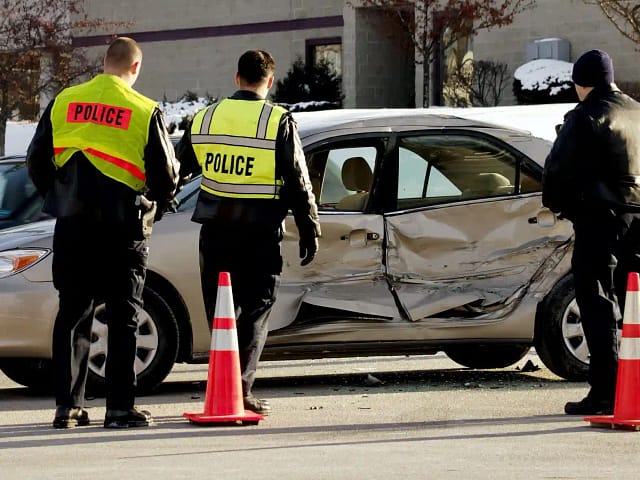
Illinois is an at-fault state for car accidents. The driver who caused the crash is legally responsible for the other party’s medical bills, lost wages, and other damages. Illinois also follows a modified comparative negligence rule: if you are partially at fault, your compensation is reduced by your share of fault, but only if you are 50% or less responsible.
In states with no-fault systems, each driver files with their own insurer regardless of who caused the crash. Illinois works differently: fault determines who pays. If another driver ran a red light and hit you, their insurance covers your damages, not yours.
Understanding the difference between at-fault and no-fault states matters most when the accident involves an out-of-state driver or if you have recently relocated to Illinois.
Illinois car insurance requirements set the following minimums for every driver:
If you are seriously injured, $25,000 may not cover your bills. A single emergency room visit with imaging can exceed that amount before any specialist care or rehabilitation begins.
The gap becomes a real problem when the at-fault driver carries the state minimum, your damages total $80,000, and their insurer pays out $25,000 and stops there.
That protection is your own UM/UIM coverage. When the at-fault driver’s policy limits are not enough to cover your damages, your UM/UIM fills the gap. It also applies if you are hit by a driver carrying no insurance at all. Illinois requires insurers to offer this coverage specifically because minimum-policy drivers are common on the road.
The Illinois Department of Insurance publishes current minimum requirements and can help you verify what your policy actually covers.
Illinois follows modified comparative negligence with a 51% bar. Here is how it works:
A concrete example: you have $100,000 in total damages, and the adjuster assigns you 20% of the fault. Your recovery is reduced by $20,000, and you collect $80,000.
Under modified comparative negligence, Illinois courts rarely treat fault as all-or-nothing. In most real accidents, both drivers made some decision that contributed to the crash. Illinois law accounts for that, but it also sets a hard cutoff. Cross the 51% threshold, and you walk away with nothing, even if the other driver was primarily responsible.
Where this matters most is in how insurers approach settlement. Adjusters use Illinois comparative negligence rules as a negotiating tool from the first call. If they can establish that you were texting, speeding slightly, or failed to react in time, they assign you a percentage and reduce the offer accordingly. A 15% fault assignment on a $150,000 claim costs you $22,500 before negotiations even begin.
A personal injury lawyer can challenge that percentage with the police report, witness statements, traffic camera footage, and vehicle damage patterns. In many cases, disputing it is where the most money is recovered, not in arguing the base damages figure. The difference between being found 10% at fault and 30% at fault on a significant claim can be worth more than most people realize going into the process.
The governing statute is 735 ILCS 5/2-1116. For a deeper explanation of how comparative negligence works across different claim scenarios, that resource breaks down the practical impact on settlements and trial outcomes.
After a crash in Illinois, the fault is determined in stages. The police respond to the scene, file their report, and issue any citations. Then each insurer opens its own adjuster’s investigation, reviewing that report alongside photos, witness statements, dashcam footage, and vehicle damage to build a picture of what happened. The evidence both sides gather in the days after the crash is what ultimately drives the fault determination.
Do not give a recorded statement to the other driver’s insurance company before speaking with a lawyer. Adjusters are trained to ask questions in ways that produce answers useful to the insurer. You are not required to give that statement, and what you say early in the process can be used to reduce your recovery later.
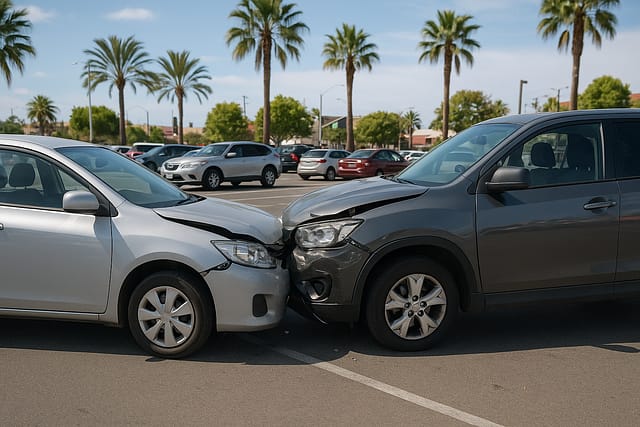
In Illinois, your first and most immediate obligation is to call law enforcement if the crash involved any injuries, a fatality, or significant property damage.
In Chicago and across Illinois, crashes within city limits are handled by local police, while crashes on highways and interstates fall under Illinois State Police jurisdiction.
The second obligation is a written crash report submitted directly to the Illinois Department of Transportation (IDOT), not to your local police department. Under 625 ILCS 5/11-408, you have 10 days to file it if the crash meets either of these thresholds:
For minor accidents that fall below these thresholds, there is no legal obligation to report.
That does not mean skipping documentation is wise. An injury that feels minor at the scene can develop into something more serious over the following days, and without a record from the day of the crash, connecting that injury to the accident becomes much harder when dealing with an insurer. Take photos, exchange information, and write down what happened while the details are still clear.
In Illinois, car accident claims follow three separate filing deadlines depending on the type of damage involved.
The Illinois car accident statute of limitations for wrongful death is worth understanding specifically. If someone survives the initial crash but dies from their injuries weeks or months later, the two-year clock starts on the date of death, not the date of the collision.
Two exceptions affect how the Illinois personal injury statute of limitations applies in practice. If the injured person was a minor at the time of the accident, the statute of limitations is generally paused until they turn 18. Claims against a government entity, such as a municipality or a state agency, carry a much shorter notice deadline, often as little as one year, and you must notify them formally before you can file a lawsuit.
Waiting until the deadline approaches creates practical problems beyond the legal risk. Evidence disappears, witnesses forget, and medical records become harder to obtain. The deadline is the last possible moment to file, not the target. If you want to see how Illinois compares to other states, this overview of filing deadlines by state covers the differences.
Illinois car accident liability covers both economic and non-economic damages, and the state does not cap either category in private personal injury cases.
Economic damages cover losses with a clear dollar value:
Non-economic damages cover losses that do not come with a price tag: pain and suffering, emotional distress, loss of enjoyment of life, and the impact on your relationships and daily routine.
Medical records, pay stubs, receipts, and a personal journal capturing how the injury has affected your daily life all carry real weight in both categories.
For a complete breakdown of how these categories are valued, this overview of personal injury damages goes into detail on both.
You do not need a lawyer for every crash. These are the situations where having one changes what you recover.
Whether you were in a crash in Chicago, Rockford, Naperville, or anywhere else in Illinois, the same rules apply statewide. Chicago personal injury lawyers at Thompson Law handle these cases on contingency. Free consultation. No fee unless we win. Contact us here.
Whether you were in a crash in Chicago, Rockford, Naperville, or anywhere else in Illinois, Thompson Law handles these cases on contingency. Contact us for a Free Consultation. No Fee Unless We Win.

No. Illinois is an at-fault state for car accidents, not a no-fault state. The driver who caused the accident is legally responsible for the other party’s damages, including medical bills, lost wages, and property damage. You file a claim against the at-fault driver’s insurance, not your own.
Two years from the date of the accident for personal injury claims under 735 ILCS 5/13-202. Wrongful death claims carry the same two-year deadline, but the clock starts on the date of death, not the date of the accident. Property damage claims have five years under 735 ILCS 5/13-205.
Illinois uses modified comparative negligence with a 51% bar. If you are 50% or less at fault, you can still recover damages, but your compensation is reduced by your percentage of fault. If you are found 51% or more at fault, you cannot recover anything.
Your own uninsured motorist (UM) coverage pays when the at-fault driver has no insurance. If the at-fault driver has insurance but their policy limits are not enough to cover your damages, that is where underinsured motorist (UIM) coverage applies. Illinois law requires insurers to offer both, and knowing which one applies to your situation affects how you file your claim.
If the Illinois car accident meets the damage threshold, you have 10 days to submit a written report to IDOT. The threshold is $1,500 in damage if all drivers are insured, or $500 if any driver is uninsured.
Sí. Podemos ayudarle en español. Si usted o un familiar sufrió lesiones en un accidente de auto en Illinois, incluyendo Chicago, Rockford, Naperville, Joliet u otras ciudades del estado, contáctenos para una consulta gratuita. Le explicaremos sus derechos y opciones de forma clara, sin costo y sin compromiso.





Thompson Law charges NO FEE unless we obtain a settlement for your case. We’ve put over $2.1 billion in cash settlements in our clients’ pockets. Contact us today for a free, no-obligation consultation to discuss your accident, get your questions answered, and understand your legal options.
State law limits the time you have to file a claim after an injury accident, so call today.