What to do after a car accident in Texas comes down to three priorities: protect your health, document everything, and avoid the early mistakes that cost claims their value. Evidence on Dallas roads disappears within hours, and a single statement to the wrong adjuster can cut your settlement in half. If you were injured in North Texas, understanding personal injury claims in Texas is the first step in protecting your rights.

After a car accident in Dallas, move to safety, call 911, and check for injuries. Photograph the scene, exchange insurance information, and request a crash report number. See a doctor the same day, even if you feel fine. Notify your insurer, avoid recorded statements, and contact a Dallas car accident lawyer before accepting any settlement.
Use this checklist at the scene and in the hours that follow:
For a complete walkthrough that applies anywhere in Texas, see our full accident response guide.
The steps you take in the first 15 minutes protect your health, preserve your evidence, and prevent the mistakes insurers use to lower your payout. On high-traffic corridors like I-35E, US-75, I-30, LBJ, and the Dallas North Tollway, skid marks fade, debris gets cleared, witnesses drive off, and traffic cameras overwrite footage fast.
The corridors above are also where insurance adjusters fight hardest. Documenting the scene early closes the door on a lot of those arguments.
Call 911 after any Texas car accident that involves an injury, a death, or apparent property damage over $1,000. Texas Transportation Code makes reporting in these situations mandatory, and failure to stop or report can carry criminal penalties on top of any civil liability.
Even when the crash looks minor, and everyone seems fine, calling 911 still protects you. A police-generated crash report creates an independent record of what happened: who was driving, vehicle positions, road conditions, statements from each driver, and the officer’s preliminary assessment of fault. Without that report, an insurance claim turns into one driver’s word against another’s, and the adjuster usually picks the version that costs the insurer less.
Two scenarios where calling 911 matters most:
Inside Dallas city limits, the call goes to the Dallas Police Department. On freeways and state highways, Texas DPS typically responds. In either case, ask the responding officer for the crash report number before you leave the scene.
Exchange the basic identifying information with every driver involved. Texas drivers are required to share name, address, vehicle registration, and proof of insurance at the scene of any reportable crash. Sharing more than that creates risk, not protection.
The core information to collect from each driver:
If the other vehicle is a commercial truck, delivery van, rideshare, or company car, also collect the employer name, USDOT number (visible on commercial vehicles), and the driver’s CDL number. Employer details can open a second avenue of liability through the company’s insurance, which often carries much higher policy limits than a personal auto policy.
Witnesses leave fast. Before they drive off, get the name and phone number of anyone who saw the crash and a one-sentence note of what they saw. A witness who confirms the other driver ran the red light is worth more to your claim than three days of arguing with an adjuster.
Share only what Texas law requires. Do not give your social security number, your work schedule, or a recorded statement at the scene. The other driver’s insurer will contact you later, and that’s the appropriate moment for a measured response, not the chaos of a roadside conversation.
Documentation is what wins fault disputes. Photos and video taken in the first 30 minutes carry more weight than anything you can reconstruct later, especially on Dallas corridors where traffic clears the scene fast.
Capture these images at every crash:
Walk the scene with your phone recording video if you can. A 30-second walkthrough captures spatial context that still photos miss: vehicle positions relative to each other, sight lines, and traffic flow.
Look up. On I-35E, US-75, I-30, LBJ, and the Dallas North Tollway, TxDOT cameras record continuously but overwrite footage on short cycles. Nearby businesses, gas stations, ATMs, and parking structures often have footage that disappears within days. Note any camera you see, and tell your lawyer fast so the footage can be preserved before it loops.

Same-day medical care after a Dallas car accident protects both your health and your claim. Adrenaline at the scene masks pain, which is why whiplash, concussions, internal injuries, and soft tissue damage often surface hours or days later. A clinical exam dated to the crash creates a record that ties symptoms to the accident.
Any gap between the crash and your first medical visit gives the insurer ammunition. A week of waiting becomes the adjuster’s argument that the injuries were not serious, or that something else caused them. The longer the gap, the cheaper the claim looks to the insurance company.
Dallas has multiple options for same-day care:
Keep every piece of paperwork the visit generates. Discharge instructions, prescription receipts, imaging orders, work restrictions, and follow-up referrals. These documents become evidence in the claim and prove you followed medical advice. Missing a single follow-up appointment is enough for an adjuster to argue you weren’t really hurt.
Which agency holds your crash report depends on where the accident happened. The report lists drivers, vehicles, insurance information, witness statements, and the officer’s preliminary assessment of fault. Adjusters and attorneys read it first, so getting it quickly matters.
Ask the responding officer for the report number before you leave the scene. That single number unlocks the report on every agency portal and saves days of phone calls trying to track it down. Write it on your phone, on paper, on anything you carry.
If portals, deadlines, and multiple agencies feel overwhelming after an injury, a Dallas car accident lawyer can pull these records on your behalf. More importantly, attorneys can send preservation letters to TxDOT, the Dallas Police, and nearby businesses to lock down 911 audio, body-cam footage, and traffic video before the agencies overwrite or purge it.
What you say to insurance in the first 48 hours can determine the size of your settlement. Adjusters are trained to ask questions that sound friendly but produce statements they use to lower the payout. The rules are simple: report the basics, stay quiet on the rest.
Notify your own insurer promptly with the basic facts only. Date, time, location, the other driver’s name, and policy information. That’s it. Do not narrate the crash, do not assess fault, and do not estimate your injuries. A simple “I was in a crash, I’m getting medical care, I’ll have more information soon” is enough.
When the other driver’s insurer calls (and they will, often within 24 hours), the rules change:
Speed is part of the strategy. Adjusters call before you’ve seen all your doctors, before bills arrive, and before you understand the long-term impact of the injury. Familiarity with common insurance company tactics is what separates a fair settlement from a fast one.
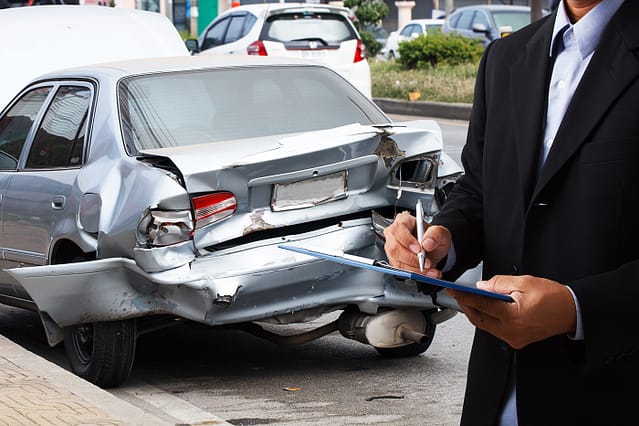
The same handful of mistakes show up in claims that fail to recover full value. Each one hands the insurance company an argument for paying less.
Most of these mistakes happen in the first 48 hours, before you’ve had time to think clearly. The fix is simple: slow down on the insurance calls, document everything, and call a lawyer before signing.
Two Texas laws shape every car accident claim: the two-year statute of limitations and the modified comparative negligence rule. Both have direct consequences for how much you recover and whether you recover at all.
The statute of limitations gives you two years from the date of the crash to file a lawsuit. Miss that deadline and the claim is permanently barred, no matter how strong the evidence. The two-year clock runs even while you are still treating, still negotiating with insurance, or still waiting on a settlement offer.
Texas follows a modified comparative negligence rule, often called the “51% rule.” If you are 50% or less at fault for the crash, you can still recover compensation, reduced by your percentage of fault. Cross the 51% threshold, and you recover nothing. Adjusters know this and push to assign you fault percentages whenever they can.
Two deadline traps that catch people unprepared:
How fault is determined in a car accident depends on police reports, witness statements, camera footage, and physical evidence. The adjuster’s initial assessment is not the final word, and challenging it often increases settlement value.
Texas law applies to your case regardless of where you live or hold a driver’s license. The two-year statute of limitations, the 51% comparative negligence rule, and all reporting requirements are the same for out-of-state drivers as for Texas residents.
The good news: most of the claims can be handled remotely. Phone calls, video meetings, electronic signatures, and emailed records make it possible to manage the case from another state without flying back. Medical care can be transferred to providers near your home, and your Texas attorney handles agency requests, insurer communication, and court filings on your behalf.
Two things out-of-state drivers should not skip:
For a deeper walkthrough of the process from out of state, see our guide on an out-of-state accident in Dallas.
The Dallas corridors with the highest crash rates are I-35E, US-75, I-30, I-635 (LBJ), and the Dallas North Tollway. Surface streets in Uptown, Oak Cliff, and Deep Ellum also see frequent crashes tied to nightlife, congestion, and rideshare drop-offs.
Higher speeds and more vehicles cut both ways for your case. More TxDOT cameras, business cameras, and dashcams mean more potential footage to support your claim. The trade-off is complexity: multiple involved drivers, contested fault, and overlapping insurance policies that take longer to sort out.
Footage on these corridors does not stay forever. Most traffic cameras overwrite within 72 hours, and nearby business cameras often loop in days. The sooner an attorney sends preservation letters, the higher the chance the video that proves your case still exists when it matters.
A handful of decisions after a Dallas crash can erase the value of an otherwise strong case. Avoid these, whether the accident felt minor or serious:
The Dallas crashes that benefit most from legal representation share a common pattern: real injuries, contested fault, or pressure from an insurer to settle fast. If any of that describes your case, calling a lawyer early protects what the claim is actually worth.
Call a Dallas car accident lawyer if any of these apply to your case:
Most Dallas personal injury firms work on contingency, which means no upfront cost to you. An experienced injury attorney reviews the case, identifies all available insurance, and tells you whether legal representation will increase the value of your claim.

Thompson Law offers Dallas crash victims a free consultation with no fee unless we win. We handle cases from the first call through settlement or trial, and most of the process can be managed without you leaving home. Contact us today to understand what your claim is worth before the insurer sets the terms. Our Dallas personal injury lawyers serve Dallas, Plano, Irving, Garland, Arlington, Frisco, McKinney, and the rest of the Metroplex.
Move to safety, call 911, check for injuries, photograph the scene, exchange information, and ask the officer for the crash report number before you leave. See a doctor the same day.
Yes, if the crash involves any injury, death, or property damage over $1,000, Texas law requires reporting. Even for smaller crashes, a police report creates an independent record that protects your claim.
Most Texas drivers must report an accident as soon as possible at the scene through 911 or law enforcement. The two-year statute of limitations applies separately to filing a personal injury lawsuit.
Do not admit fault, do not guess about injuries, do not give a recorded statement, and do not accept the first settlement offer. Stick to the date, time, and location of the crash.
You may still recover through your own uninsured/underinsured motorist (UM/UIM) coverage if you carry it. Texas does not require UM/UIM, but most policies include it unless you signed a written waiver.
Yes, as long as you are 50% or less at fault under Texas’s modified comparative negligence. Your recovery is reduced by your percentage of fault. Above 51%, you recover nothing.
Call after any crash involving ER care, ongoing treatment, disputed fault, a commercial vehicle, a denied claim, or pressure from an insurer to settle fast. Most consultations are free.
Sí. Podemos ayudarle en español. Si usted o un familiar resultó lesionado en Dallas, Plano, Irving, Garland, Mesquite, Grand Prairie, Arlington, Frisco, McKinney o en otras áreas del Metroplex de Dallas-Fort Worth, contáctenos para una consulta gratuita. Le escuchamos, le explicamos sus derechos y le guiamos paso a paso. No paga nada si no ganamos su caso.





Thompson Law charges NO FEE unless we obtain a settlement for your case. We’ve put over $2.1 billion in cash settlements in our clients’ pockets. Contact us today for a free, no-obligation consultation to discuss your accident, get your questions answered, and understand your legal options.
State law limits the time you have to file a claim after an injury accident, so call today.