What to Do After a Motorcycle Accident in Texas

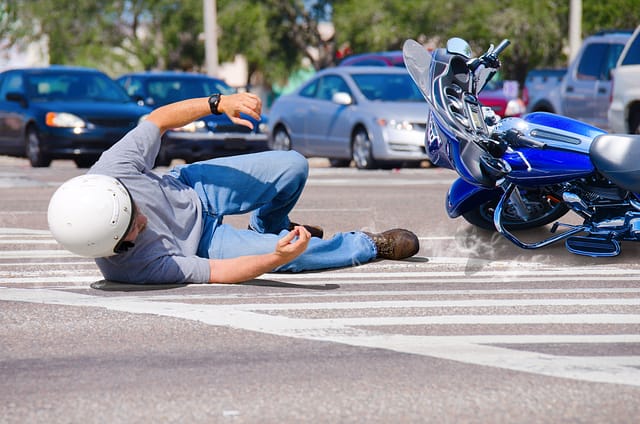
Helmet and motorcycle next to broken peaces of a car on the street after car crash. Injuries motorcycle accidents. Grand Prairie Motorcycle Accident Lawyer. Corpus Christi Motorcycle Accident Lawyers. Lubbock Motorcycle Accident Lawyer

After a motorcycle accident in Texas, move to safety, call 911, check for injuries, document the scene, and exchange information with all drivers involved. Seek medical care the same day, report the accident to your insurer, and contact a Texas motorcycle accident lawyer. Texas law gives you two years to file a claim after motorcycle accidents in Texas, but evidence disappears fast, and insurance companies move faster. 

What to Do After a Motorcycle Accident in Texas (Step-by-Step)

Move to safety, call 911, check for injuries, collect witness information, document the scene, exchange information, seek medical care, report to your insurer, and contact a lawyer. These are the nine steps to take after a motorcycle accident in Texas: 

  1. Move to safety and turn on your hazard lights: Get yourself and your bike out of traffic if you can do so without making injuries worse. Staying in the road puts you at risk for a second collision before help arrives.
  2. Call 911 and request both police and medical response: A police report creates an official record of the crash that your claim will depend on. Don’t assume someone else already called.
  3. Check yourself and others for injuries and keep your helmet on: If you feel pain in your head, neck, or back, leave your gear on until paramedics arrive. Removing a helmet after a potential spinal injury can cause serious additional damage.
  4. Identify witnesses and get their contact information: Ask anyone who saw the crash for their name and phone number before they leave the scene. Witness accounts are often the deciding factor when fault is disputed.
  5. Document the scene with your phone: Photograph every vehicle involved, all visible damage, road conditions, skid marks, traffic signs, and any injuries. Take more photos than you think you need; you cannot go back.
  6. Exchange information with every driver involved: Get their full name, driver’s license number, insurance carrier and policy number, and license plate. If there are multiple vehicles, document all of them.
  7. Seek medical care the same day, even if you feel fine: Adrenaline masks pain. Injuries like internal bleeding, concussions, and soft tissue damage often show no immediate symptoms. A same-day medical record also links your injuries directly to the crash, which carries weight in any injury claim that follows.
  8. Report the accident to your insurer and stick to the facts: Notify your insurance company that the crash occurred, but do not speculate about fault or give more detail than the basic facts. Anything beyond that can be used against you.

Contact a Texas motorcycle accident lawyer before giving any recorded statement: The other driver’s insurer may call quickly and sound friendly. Don’t record a statement without legal guidance first. If you were just hit by another driver, getting legal advice before that call is one of the most important moves you can make.

Fragments of a broken motorcycle on the pavement. What to Do After a Motorcycle Accident in Texas.

What Not to Do After a Motorcycle Accident

The most damaging mistakes after a Texas motorcycle crash are leaving the scene, skipping medical care, admitting fault, and posting about the accident on social media. 

  • Leave the scene early: Leaving before police arrive is illegal in Texas and signals fault to insurers, even if you weren’t responsible for the crash.
  • Skip or delay medical care: Gaps in treatment give insurers a reason to argue your injuries weren’t serious or weren’t caused by the crash. Go the same day, even if you feel okay.
  • Admit fault or apologize at the scene: “I didn’t see you” or “I’m sorry” can be used as admissions of liability. Stick to exchanging information and let the investigation determine fault.
  • Give a recorded statement to the other driver’s insurer without a lawyer: Their adjuster’s job is to minimize your payout. You are not required to give a recorded statement, and doing so without legal advice is a risk you don’t need to take.
  • Accept a fast settlement before your injuries are fully evaluated: Early offers rarely account for long-term treatment, lost wages, or permanent damage. Once you sign, you give up the right to ask for more.
  • Post about the accident on social media: Photos, comments, or check-ins can contradict your injury claims. Keep the crash off your accounts until your case is resolved.

These mistakes don’t just hurt your claim; they can end it. If you want to know more about common mistakes after an accident, the same patterns that hurt car accident victims apply here.

Evidence That Protects Your Motorcycle Accident Claim

The most important evidence after a Texas motorcycle crash includes photos of the scene, witness contact information, the police report number, medical records from the same day, and repair estimates.  

  • Scene photos: Photograph every vehicle, the point of impact, skid marks, road conditions, traffic signs, and your injuries. Take photos from multiple angles before anything is moved.
  • Helmet and gear damage: Your helmet, jacket, and boots tell a physical story about the force of the impact. Preserve all gear exactly as it was after the crash. Do not clean or discard anything.
  • Witness names and phone numbers: Get contact information from anyone who saw the crash. A witness who can confirm the other driver ran a red light or changed lanes without signaling can make or break a disputed claim.
  • Police report copy: Request a copy of the official report as soon as it is available. It includes the responding officer’s observations, any citations issued, and the preliminary fault determination.
  • Medical records and bills from the same day: Same-day records connect your injuries directly to the crash. Every follow-up visit, prescription, and treatment note adds to the documented value of your motorcycle accident injury claim.
  • Repair estimates: Get a written estimate for your bike and any damaged gear. Property damage records support the overall picture of how serious the crash was.
  • Surveillance and dashcam footage: Nearby businesses, traffic cameras, and other drivers’ dashcams may have captured the crash. This footage can disappear within days, so request it fast or ask a lawyer to send a preservation letter immediately.

The stronger your evidence, the harder it is for an insurer to dispute your version of what happened after a crash in Texas. Motorcycle Wreck in Busy Intersection

Texas Motorcycle Laws That Affect Your Claim

Three Texas laws directly shape what happens to your claim: the helmet requirement, the modified comparative fault rule, and the two-year deadline to file. Understanding all three before you talk to an insurer puts you in a stronger position.

Law What It Says Why It Matters for Your Claim
Helmet law (Tex. Transp. Code § 661.003) Texas requires helmets for riders under 21. Riders 21 and older may opt out if they carry qualifying medical insurance or have completed an approved safety course. Insurers will raise helmet use as a factor in your injuries, even when you had the legal right to ride without one.
Modified comparative fault You can recover damages as long as you are less than 51% at fault. Your award is reduced by your percentage of fault. If an insurer argues you were 20% at fault, your compensation drops by 20%. Fault allocation is negotiable, and having legal representation matters.
Statute of limitations (Tex. Civ. Prac. & Rem. Code § 16.003) You have two years from the date of the accident to file a personal injury claim. Missing this deadline ends your right to compensation, with very limited exceptions. Two years sounds like a long time until the evidence is gone and witnesses have moved on.

Riders across Texas personal injury cases face these same rules, whether the crash happened on a rural highway or in a city. For Dallas motorcycle accident victims, local traffic patterns and highway conditions add another layer to how fault gets assigned. 

When to Contact a Texas Motorcycle Accident Lawyer

Contact a Texas motorcycle accident lawyer immediately after the crash, before giving any recorded statement to an insurance company. Three situations make legal representation especially critical.

  • Fault is disputed: When the other driver, their insurer, or the police report places partial or full blame on you, an attorney can challenge that determination with evidence. Comparative fault in Texas is negotiable, and every percentage point affects your final compensation.
  • The insurer is offering a fast or low settlement: A quick offer almost always means the insurer knows your claim is worth more. Once you accept, you cannot go back. A lawyer reviews the offer against the full scope of your injuries, lost wages, and long-term treatment before you sign anything.
  • Your injuries require ongoing treatment: Surgeries, physical therapy, and long-term care add up fast. An attorney makes sure your settlement accounts for future medical costs, not just the bills you have right now.

Most Texas motorcycle accident lawyers work on contingency, meaning a free consultation to start and no fee unless we win. If another driver caused the crash, you pay nothing to get legal advice. 

Get a Free Case Review From a Thompson Law Motorcycle Accident Lawyer

Thompson Law offers Texas motorcycle accident victims a free consultation with no fee unless we win. You tell us what happened, we review your case, and you decide if you want to move forward. No pressure, no obligation. If another driver caused your crash, contact us to get started.

Frequently Asked Questions

What should I do immediately after a motorcycle accident in Texas?

Move to safety, call 911, and check for injuries. Document the scene with photos, exchange information with all drivers involved, and get medical care the same day. Evidence disappears fast, so acting in the right order protects both your health and your claim.

What is the statute of limitations for a motorcycle accident in Texas?

Two years from the date of the accident, under Tex. Civ. Prac. & Rem. Code § 16.003. Missing that deadline ends your right to compensation. Acting early matters because witnesses become harder to locate and physical evidence disappears well before the two years are up.

Do I have to wear a helmet in Texas?

Riders under 21 are required to wear a helmet. Riders 21 and older may opt out under Tex. Transp. Code § 661.003 if they carry qualifying medical insurance or have completed an approved safety course. Even when helmet use was legal, insurers will raise it as a factor in your injuries, so document your compliance either way.

What not to do after a motorcycle accident?

The most damaging mistakes are leaving the scene early, skipping medical care, admitting fault at the scene, and giving a recorded statement to the other driver’s insurer without a lawyer. Each one gives the insurance company a reason to reduce or deny your claim.

What is the three-collision rule in motorcycles?

The three-collision rule describes what happens to your body in a crash. The first collision is the bike hitting the object. The second is your body hitting the bike or the ground. The third is your internal organs hitting the inside of your body. Third is why serious injuries like internal bleeding or concussions show no symptoms immediately and why same-day medical care is critical even when you feel fine.

How long does a motorcycle accident claim take in Texas?

Most straightforward claims resolve in three to six months. Cases involving disputed fault, serious injuries, or uncooperative insurers can take one to two years or longer. The factors that extend a timeline most are ongoing medical treatment, multiple liable parties, and delays in the insurance company’s investigation.

¿Habla Thompson Law español para víctimas de accidentes de moto en Texas?

Sí, Thompson Law cuenta con abogados y personal que hablan español. Si fuiste víctima de un accidente de motocicleta en Texas, puedes comunicarte con nosotros en español para recibir una consulta gratis y no cobramos a menos que ganemos tu caso.No Win No Fee for Personal Injury Case After a Motorcycle Accident

Recent Post

Person documenting a car accident scene with a mobile phone, taking photos of vehicle damage and evidence for an insurance claim

What to Do After a Car Accident in Texas

Knowing what to do after a car accident in Texas can help you protect your health, your legal rights, and your insurance claim from the very beginning. Even a minor

Read More

Judge’s gavel representing the personal injury claims process after a car accident

Personal Injury Claim Process After a Car Accident in Texas

The personal injury claim process after a car accident typically involves medical treatment, opening an insurance claim, investigating fault and damages, negotiating a settlement, and, if needed, filing a lawsuit.

Read More

Car Wreck Lawyer - Augusta Personal Injury Lawyers

When To Get A Car Wreck Lawyer

Following a car accident, you may be asking yourself, “When do I need a car wreck lawyer?” The answer: It is always worth contacting a car accident attorney. Start by

Read More

Male mule deer attempting to cross the road in Yosemite Valley in early morning. Where Should Pedestrians Go If There Are No Sidewalks?

Where Should Pedestrians Go If There Are No Sidewalks? According To Texas Law

Where Should Pedestrians Go If There Are No Sidewalks? Pedestrians walking on roads without sidewalks need to use specific strategies to stay safe. It's essential to walk on the left

Read More

Red 18-wheeler semi truck crashed into a gray car on a roadway

Who Is Liable in a San Antonio 18-Wheeler Accident?

In a San Antonio 18-wheeler accident, liability can fall on the truck driver, the trucking company, cargo loaders, maintenance providers, or a parts manufacturer. Texas law allows victims to recover

Read More

Personal Injury Lawyers

How a Personal Injury Claim Works in San Antonio, Texas

The personal injury claim process in Texas starts with medical treatment and evidence gathering, moves through insurance negotiation and a formal demand, and ends in settlement or lawsuit. Most San

Read More

Thompson Law Guarantee

Thompson Law charges NO FEE unless we obtain a settlement for your case. We’ve put over $1.9 billion in cash settlements in our clients’ pockets. Contact us today for a free, no-obligation consultation to discuss your accident, get your questions answered, and understand your legal options.

State law limits the time you have to file a claim after an injury accident, so call today.