Many people wonder if it is illegal to drink non-alcoholic beer while driving. Under federal law, it is not. Beverages below 0.5% ABV are not classified as alcohol under DUI statutes, and most U.S. states follow the same threshold. That said, NA beer looks identical to regular beer, which means you can still be pulled over, questioned, or breathalyzed even when you have done nothing wrong.
In most states, drinking non-alcoholic beer while driving is not illegal because beverages under 0.5% ABV are not classified as alcohol under DUI laws. However, state open container laws vary, and an open NA beer can look like regular beer to police, leading to traffic stops, breathalyzer tests, or citations even when no law was broken.
If you’re unsure about your state’s specific laws, speak with a DUI defense attorney for a Free Consultation.
According to the Tax and Trade Bureau (TBB), an alcoholic beverage has 0.5% ABV or higher, below that threshold, it is considered non-alcoholic. Labels are not always accurate.
Some studies have found products labelled as 0.0% that test above 0.5% ABV, meaning your safe drink could legally be considered alcoholic, and that changes everything.
You need to be aware of this, since a beer that says zero alcohol can still register on sensitive tests and look identical to regular beer to a police officer, and become an issue that can escalate to legal trouble.
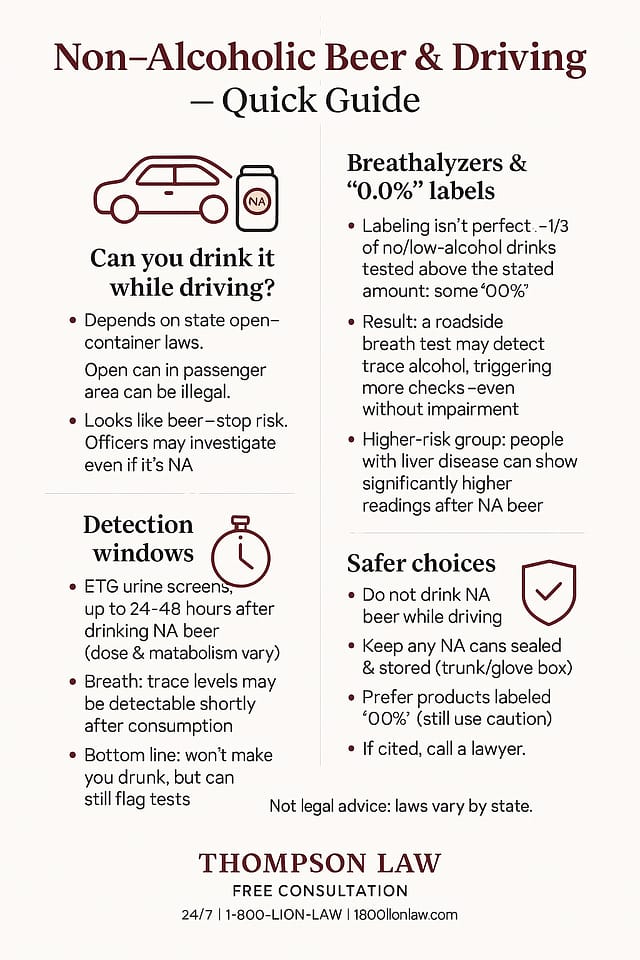
In most U.S. states, drinking non-alcoholic beer while driving is not illegal. According to NHTSA, federal open container laws apply only to beverages above 0.5% ABV, and most states follow the same threshold.
That said, three factors determine your actual legal exposure in any given state:
Each state has its own specific rules regarding this matter, with its own regulations and restrictions, so it’s a good idea to do a little research to make sure you’re on the safe side.
States where an alcoholic beverage is defined as ≥ 0.5% ABV, which excludes non-alcoholic beer for the open container statute. For example, Texas, Arizona, Florida, and California, so can you drink non-alcoholic beer while driving in California? Yes, but carefully.
Some states have more ambiguous regulations, where any beverage with any alcohol content falls under the restrictions, or where the language is broad enough that a non-alcoholic beverage could be treated as an alcoholic beverage. Georgia, Alabama, and parts of the Northeast, such as New York and Pennsylvania, are the most notable examples.
There are even stricter states where the sale of non-alcoholic beverages to people under 21 is prohibited, even though adults are allowed to consume them while driving. These states include Alabama, Florida, Georgia, Idaho, Indiana, Maine, Minnesota, Missouri, Pennsylvania, and West Virginia.
Laws change. Local ordinances and under-21 rules can differ from state law, so confirm with your state’s Alcoholic Beverage Control (ABC) agency or speak with an attorney before assuming what’s legal in your area.
The most common misconception is that a 0.0% label guarantees no alcohol. Some products labeled 0.0% test above 0.5% ABV, and even trace amounts can register on sensitive devices or trigger violations in probation or workplace contexts.
A second misconception is that legal means risk-free. Even where NA beer is permitted, an open container that looks like regular beer gives an officer reasonable grounds to stop you, regardless of what you are actually drinking
Yes. An open container that looks like regular beer gives an officer reasonable suspicion to pull you over, regardless of what is actually inside. From a distance, NA beer and regular beer are visually identical, and that is enough grounds for a stop.
Once stopped, an officer may request a breathalyzer test, a field sobriety test, or a vehicle search if probable cause is established. Cooperate with legally required testing, but you are not required to consent to a vehicle search without a warrant.
If you were cited after drinking only non-alcoholic beer, speaking with a DUI defense attorney is the right next step.
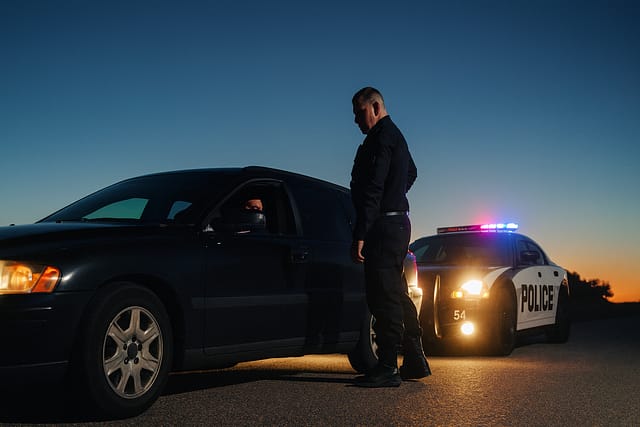
Generally, non-alcoholic beer will not trigger a breathalyzer. Beverages below 0.5% ABV metabolize too quickly to reach a detectable BAC level. However, a few specific factors can change that:
Any of those things means you’re guilty; it means you need an attorney who can assist you. Consult a lawyer if you find yourself in that situation.
ETG urine tests can detect alcohol metabolites for 24 to 48 hours after consuming non-alcoholic beer. In some states, that detection window can create legal exposure beyond a traffic stop, particularly for anyone on probation or subject to workplace testing.
A DUI charge is not the only legal risk that comes with drinking NA beer in a vehicle. Probation conditions, workplace testing, CDL regulations, and minor possession laws all create exposure that most people do not consider.
Most probation programs use ETG testing. NA beer can produce a positive result, and even if you didn’t intend to, a positive test can be treated as a violation.
CDL drivers are held to a stricter standard under federal DOT regulations. Any positive alcohol test, even from NA beer, can trigger consequences for your commercial license. Many private employers also enforce zero-tolerance policies and may act on a positive test result regardless of the source.
Several states restrict the sale or possession of non-alcoholic beer to anyone under 21, regardless of ABV content. If you are traveling with minors, keep NA beer sealed and stored out of their reach to avoid any ambiguity during a traffic stop.
Non-alcoholic beer produces the same breath odor as regular beer because the smell comes from the brewing process, not the alcohol content. That odor alone can raise suspicion during a traffic stop, a workplace check, or a custody dispute, even when no alcohol was consumed.
If you are pulled over while drinking non-alcoholic beer, how you handle the stop matters. Follow these steps to protect yourself and avoid escalation:
Regardless of your state’s laws, these actions increase your legal risk unnecessarily:
If any of the following situations apply to you, speaking with a personal injury lawyer is the right next step:
Thompson Law has experience with DUI, impaired driving laws, and traffic cases involving NA beer stops and citations. If you’re unsure how long you have to act, review the statute of limitations for your state before moving forward.
If you were stopped, cited, or charged after drinking non-alcoholic beer, do not assume the system will sort it out on its own. Thompson Law handles DUI, open container, and impaired driving cases across Texas, California, Arizona, and Georgia. Contact us for a free consultation. No fee unless we win.
In most states, no. Beverages below 0.5% ABV are not classified as alcohol under DUI laws, so drinking non-alcoholic beer while driving is generally legal. However, an open NA beer looks identical to regular beer, which can give an officer grounds to pull you over even when no law has been broken.
Generally no, but sensitive roadside devices can detect trace alcohol immediately after consumption. Mislabeled products that test above 0.5% ABV also increase that risk. In either case, a blood test will typically confirm you were not impaired.
Not if the beverage is below 0.5% ABV, since it is not legally classified as alcohol. However, if a breathalyzer registers a reading or an officer observes signs of impairment, you may need to demonstrate you were not under the influence.
It depends on the state. Federal law doesn’t restrict beverages under 0.5% ABV, but roughly half of U.S. states impose their own age restrictions, with some treating non-alcoholic beer the same as regular beer.
In most states, open container laws only apply to beverages above 0.5% ABV, so an open NA beer is technically legal. However, it can look identical to regular beer and give an officer grounds to stop you. To avoid the risk, keep it sealed and stored out of reach.
Sí, ofrecemos asistencia en español a personas que tienen casos de DUI o tránsito, contáctanos para recibir una consulta gratis y aclarar tus dudas. No tienes que pagar nada si no ganamos tu caso.





Thompson Law charges NO FEE unless we obtain a settlement for your case. We’ve put over $2.1 billion in cash settlements in our clients’ pockets. Contact us today for a free, no-obligation consultation to discuss your accident, get your questions answered, and understand your legal options.
State law limits the time you have to file a claim after an injury accident, so call today.